
This Is Not Enough
Published: 4/2/2026
Storytelling can feel inadequate in the face of violence and loss.
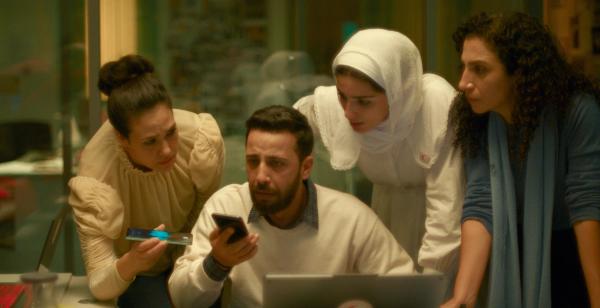
I hugged a stranger, and we cried after watching the Voice of Hind Rajab. It follows the actual audio of a little girl speaking to Red Crescent volunteers at the Ramallah call centre in the occupied West Bank. She moves between hope and despair, her high-pitched voice carrying an understanding of death no child should have. It was a deeply moving docu-film, and I have never seen anything like it. We watched it as part of the cinematic viewing during Ramadan. The lecturers and organisers (Dr Syed Haider and Dr Marigiulia Grassili) had the right to air it, and they were expecting a question-and-answer session right after it ended. But there was nothing but silence in the room, and people were sniffling. I was one of them. I felt so angry, tired, and powerless, and I just did not understand it.
I sat for a while, stood up and saw a diminutive black girl. We watched each other for a while, crying and then hugged for a long time. We walked back together. She’s from Réunion Island and speaks French. I tell her I'm from an island as well and speak French Creole. We tried to speak to each other in our languages, but nothing clicked. I walked home, stopped at a bar and drank two glasses of wine, walked into my apartment, which didn’t have a bed yet, and looked at the wall in the dark. I was depleted and just so powerless. Something hollow and full inside me, and I didn’t know where to put it. I followed the director, Ben Hania and the actors on Instagram and watched interviews in which the mother spoke about her loss. How can she move on from such a tragedy? I watched her, and I cannot imagine such strength. The film revealed things I had never fully understood. There is the bureaucracy of war. The Red Cross must give permission for an ambulance to pass. That even then, it may still be bombed. The scale of it. The cruelty. The way violence becomes part of a system. At one point, a character explains the system by tracing a line through the various agencies that must give the green light before any action can be taken. After his explanation, while he was drawing with a marker on the clear office wall, an infinity symbol was left behind. A never-ending thing.
I thought about my own desire to document violence in my community. A mother and her three-year-old grandson were among those murdered in a wave of gang violence in Vieux Fort that we had never seen before. A whole community grieving at once. The Regional Security System was called. Organisations called for peace. And then, eventually, things quieted. I wonder now if asking questions after that quiet is foolish. People buried their dead. They seemed to bury the pain, too. Maybe there is no need to bring it back and risk destroying the fragile peace by asking questions, recounting the history, or even seeking ways to prevent it from happening again. But I remember the Ubuntu Movement, now defunct, organising a remembrance event in Vieux Fort in honour of those killed. Poems were read. Talks were given. Family members came and spoke. I was one of them. The community held its breath. Some believed peace existed only because people were trying to forget. But in the end, it was healing and spiritual.
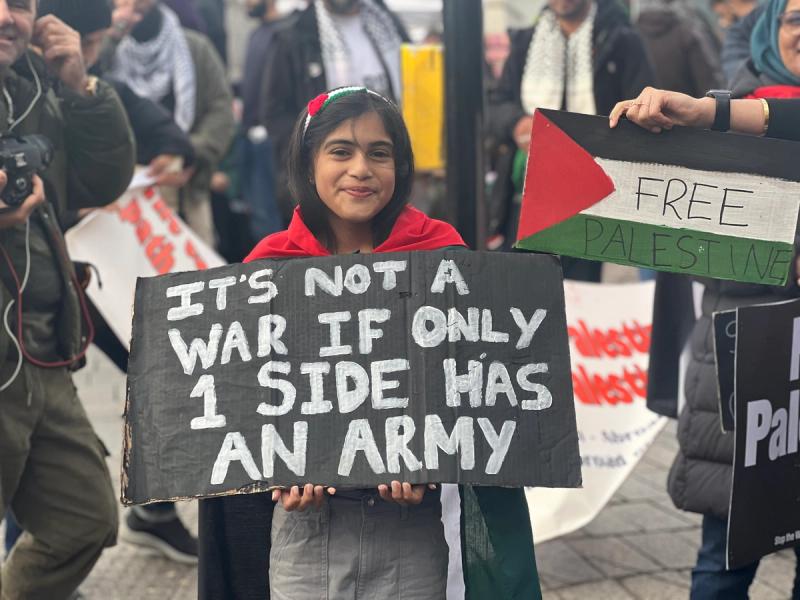
I think a lot about that film. About the little girl who died. About that girl from Réunion. About the people I know who have died violently. Who gives permission to tell the stories of the dead? I think about another girl. I met her during a protest march in London in 2023, days after the war in Gaza began. She waved at me, and her mother realised I was a journalist and insisted we take a picture with her sign. It read: It’s not a war if only one side has an army.
Just before that, I had interviewed Ibrahim, a journalist in Gaza, trapped there with his family. Bullets in the background, he spoke about trying to leave with his three daughters. His father and uncle had died days before. There was nothing I could do but listen and tell his story as best as I knew how. His story was later featured on the BBC, and some weeks later, he and his family were back in the UK.
I have a bed now. I lie in it, in the dark, looking at the wall, thinking about the girl, about the mother, about the dead, about the living, about courage. About what it means to tell stories and what it means to carry them. And how to do so without pretending it will ever be enough.

